

clitoris plastic surgery
Clitoral Surgery
Surgery that removes excess clitoral hood tissue to expose the clitoris, helping to develop sexual sensitivity and making hygiene easier
Clitoral surgery removes excess clitoral hood tissue and exposes the clitoris, helping to develop sexual sensitivity and making hygiene easier.
The clitoris is a woman's main erogenous zone; when it is covered by the hood, stimulation during sex is dulled and reaching orgasm becomes difficult. Even complex adhesions can be removed, and we work with fine precision so that no surgical marks remain. It takes about 30 minutes under sedation or local anesthesia, and you go home the same day. Recovery takes 2 weeks.

Why UROGYN considers the shape of the clitoris so important
The clitoris is a woman's main erogenous zone. When it is covered by the clitoral hood, stimulation during sex is dulled and reaching orgasm becomes difficult.
CHECKLIST
Clitoral surgery may suit you if
- you have low sexual sensitivity or anorgasmia
- the upper part of your labia minora often itches
- discharge often builds up around your clitoris
- you often notice an unpleasant odor around your clitoris
Surgery that exposes the clitoris naturally
Three benefits of clitoral surgery

Heightened female sexual sensation
With the clitoris no longer covered by the hood, stimulation during foreplay increases.

Greater sexual satisfaction as a couple
Clitoral orgasm increases sexual satisfaction for both partners.

Improved hygiene
Less debris and discharge is trapped around the clitoris, making hygiene easier.
clitoris plastic surgery
Before and after
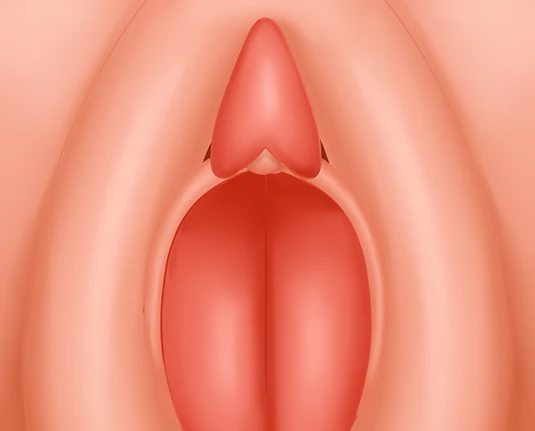
Before 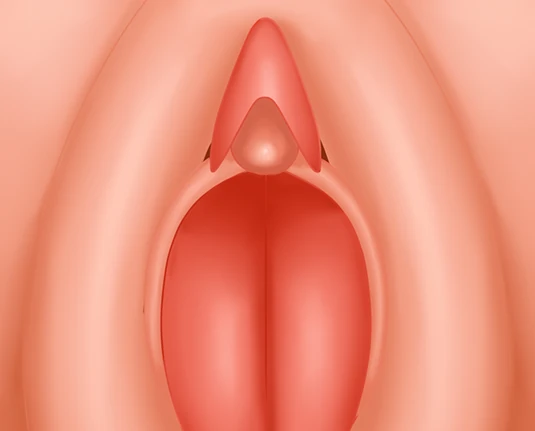
After
Surgery that also considers sensation
Adhesion removal at the same time
Even complex adhesions can be removed, and we work with fine precision so that no surgical marks remain.
STEP 1
Removing excess hood tissue covering the clitoris
STEP 2
Removing excess skin adhering to the clitoris
The procedure
- Duration
- About 30 min
- Anesthesia
- Sedation or local anesthesia
- Hospital stay
- Same-day discharge
- Recovery
- 2 weeks


AFTERCARE
After clitoral surgery
The day after surgery
Start sitz baths from the next day.
- Fill a basin with lukewarm (slightly cool) water deep enough to cover your bottom, dissolve a 500-won-coin-sized amount of Clinosan cleansing solution in it, and take a 10-minute sitz bath morning and evening for 2 weeks.
- After each sitz bath, wash your hands thoroughly and apply Vaseline ointment to the surgical wound for 10 days.
- You will be prescribed medication for 5–7 days. If you have heartburn, retching or nausea, stop taking it at once and call us.
- Once you have finished the prescribed painkillers, you may also take Tylenol or the period pain medication you usually take.
- Use an ice pack for 3 days, and wear loose, breathable clothing for 2 weeks.
2–3 days
Itching in the surgical area is normal.
Some itching in the surgical area 2–3 days after surgery is normal and a sign that it is healing well. If it is very uncomfortable, please come in to be seen.
1–3 weeks
You may have some discharge and bleeding.
- Wear a sanitary pad when you go out. At home, let the area air as much as possible.
- If bleeding is heavy, press on the area with gauze or a dry towel. Keep the pad, take a photo of it and send it to us on KakaoTalk.
Weeks 3 and 6
Come in to have your stitches removed.
- How stitches heal varies from person to person depending on skin type, but please come in once in week 3 and once in week 6 after surgery to have them removed. The visit dates may change depending on your condition.
- After the stitches are removed, apply regenerating cream to the surgical area if you have had surgery on the clitoris, labia minora, perineum, accessory folds or labia majora.
- After the stitches are removed, the labia minora and accessory folds may look slightly open or feel itchy. This is caused by skin regeneration and heals naturally as you apply the regenerating ointment, so never pull the area apart to look at it or touch it.
4–6 weeks
You can have sex 4–6 weeks after surgery, once the doctor has checked your condition.
Use a lubricant the first time you have sex.
3–4 months
Swelling takes at least 3–4 months to go down.
This may vary depending on your condition.
Daily life
Please follow these guidelines in daily life.
- Avoid alcohol, smoking, public baths and saunas for 4 weeks. You may shower from the next day.
- While you recover, avoid rubbing the surgical area, wearing tight underwear or trousers, exercising strenuously, squatting, lifting heavy objects, crossing your legs and cycling. Take care not to put downward pressure on the area.
- After a shower or sitz bath, dry the area with cool air, and after passing urine, gently pat the area dry.
When to call us
Call the clinic if you have a strong feeling of heat, chills, itching, pain, swelling or hives.
If you have any other questions, call the clinic or add the UROGYN Woman Clinic KakaoTalk channel and we will reply in a one-to-one chat.


 Naver Talk
 Naver Booking